
Have you ever said something that made another person angry? Maybe you teased a friend, argued with someone, or said something rude. In such cases, you may antagonize that person.
The word antagonize means to make someone angry, upset, or annoyed. For example, if you keep making fun of your friend, you may antagonize them. Learning synonyms for antagonize can help you express this idea in different ways.
These words are useful for students who want better vocabulary. They also help bloggers and content writers avoid using the same word again and again. Daily English users can use them in conversations, messages, emails, and essays. In this guide, you will learn 26 simple synonyms for antagonize, their meanings, and easy examples.
Quick Answer
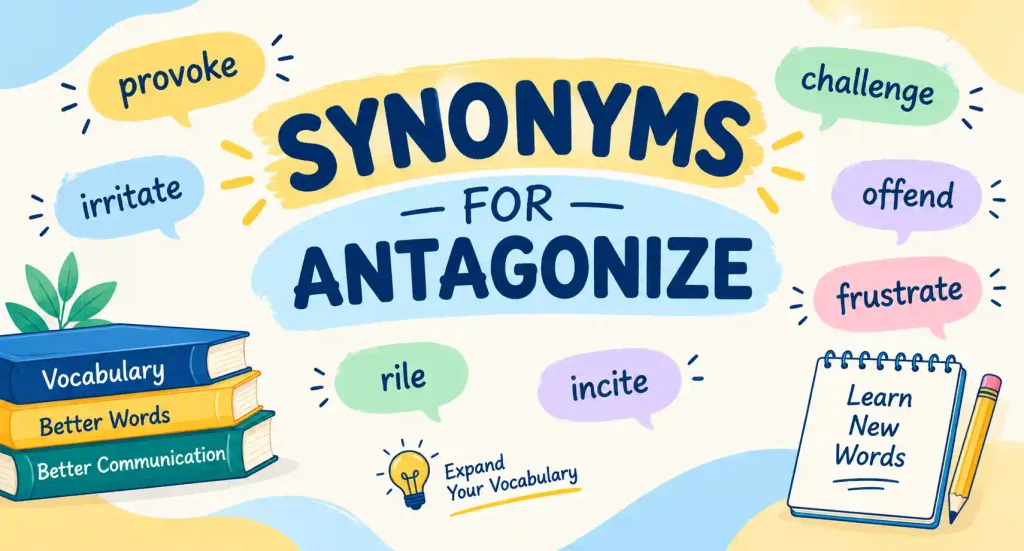
Some common synonyms for antagonize are annoy, irritate, anger, provoke, upset, bother, aggravate, infuriate, enrage, rile, vex, offend, upset, disturb, frustrate, challenge, oppose, anger, exasperate, incite, needle, pester, harass, hassle, irritate, and agitate.
Parts of Speech
| Word | Part of Speech | Simple Meaning |
| Antagonize | Verb | To make someone angry |
| Annoy | Verb | To make someone slightly angry |
| Irritate | Verb | To make someone upset or annoyed |
| Anger | Verb | To make someone angry |
| Provoke | Verb | To cause an angry reaction |
| Upset | Verb | To make someone unhappy or worried |
| Bother | Verb | To disturb or annoy someone |
| Aggravate | Verb | To make someone more annoyed |
| Infuriate | Verb | To make someone extremely angry |
| Enrage | Verb | To make someone very angry |
| Rile | Verb | To make someone angry |
| Vex | Verb | To annoy or worry someone |
| Offend | Verb | To hurt someone’s feelings |
| Disturb | Verb | To interrupt or trouble someone |
| Frustrate | Verb | To make someone feel annoyed by blocking progress |
| Challenge | Verb | To question or oppose someone |
| Oppose | Verb | To act against someone or something |
| Exasperate | Verb | To make someone very annoyed |
| Incite | Verb | To encourage an angry action |
| Needle | Verb | To annoy someone on purpose |
| Pester | Verb | To keep bothering someone |
| Harass | Verb | To trouble someone again and again |
| Hassle | Verb | To cause trouble or difficulty |
| Agitate | Verb | To make someone worried or upset |
| Antagonize | Verb | To make someone hostile or angry |
1. Annoy
Meaning: To make someone slightly angry or uncomfortable.
Examples:
- Loud music can annoy your neighbors.
- His constant questions began to annoy me.
2. Irritate
Meaning: To make someone feel angry or uncomfortable.
Examples:
- The buzzing sound started to irritate her.
- His rude comments irritated the teacher.
3. Anger
Meaning: To make someone feel angry.
Examples:
- His unfair decision angered the workers.
- It would anger her if you broke your promise.
4. Provoke
Meaning: To make someone react with anger.
Examples:
- Do not provoke your brother during an argument.
- His words provoked an angry response.
5. Upset
Meaning: To make someone unhappy, worried, or angry.
Examples:
- The bad news upset my friend.
- I did not mean to upset your parents.
6. Bother
Meaning: To annoy or disturb someone.
Examples:
- Please do not bother me while I am studying.
- The bright light bothered his eyes.
7. Aggravate
Meaning: To make someone more annoyed or angry.
Examples:
- His careless attitude aggravated his manager.
- The long delay aggravated the passengers.
8. Infuriate
Meaning: To make someone extremely angry.
Examples:
- The unfair accusation infuriated him.
- Her rude behavior infuriated the customers.
9. Enrage
Meaning: To make someone very angry.
Examples:
- The sudden price increase enraged many buyers.
- His dishonest actions enraged his family.
10. Rile
Meaning: To make someone angry or annoyed.
Examples:
- His teasing was meant to rile his sister.
- Do not let small comments rile you.
11. Vex
Meaning: To annoy or worry someone.
Examples:
- The strange problem vexed the young student.
- The missing document vexed the office staff.
12. Offend
Meaning: To hurt someone’s feelings with words or actions.
Examples:
- I hope my joke did not offend you.
- His careless remark offended several guests.
13. Disturb
Meaning: To interrupt or trouble someone.
Examples:
- Please do not disturb the baby.
- The noise disturbed everyone in the room.
14. Frustrate
Meaning: To make someone annoyed because something is not working or going well.
Examples:
- The slow internet frustrated the students.
- Repeated mistakes frustrated the coach.
15. Challenge
Meaning: To question or oppose someone in a way that may cause conflict.
Examples:
- She challenged his opinion during the meeting.
- Do not challenge him when he is already upset.
16. Oppose
Meaning: To act against someone or something.
Examples:
- Several workers opposed the new rule.
- She opposed the plan during the discussion.
17. Exasperate
Meaning: To make someone very annoyed after repeated problems.
Examples:
- The child’s repeated excuses exasperated his mother.
- The endless delays exasperated the travelers.
18. Incite
Meaning: To encourage someone to become angry or take action.
Examples:
- His speech incited the crowd to protest.
- The message was designed to incite anger.
19. Needle
Meaning: To annoy someone by making repeated teasing remarks.
Examples:
- His friends kept needling him about his mistake.
- She likes to needle her brother during games.
20. Pester
Meaning: To keep bothering someone with repeated requests.
Examples:
- The children pestered their father for a new toy.
- Please stop pestering me with the same question.
21. Harass
Meaning: To trouble or bother someone repeatedly.
Examples:
- The customer complained that the caller continued to harass him.
- No one should harass others at school or work.
22. Hassle
Meaning: To cause someone trouble or difficulty.
Examples:
- The paperwork hassled the new employee.
- I do not want to hassle you with extra work.
23. Agitate
Meaning: To make someone worried, upset, or angry.
Examples:
- The sudden news agitated the passengers.
- Try not to agitate the child before bedtime.
24. Upset
Meaning: To cause someone to feel unhappy or emotionally hurt.
Examples:
- The harsh message upset her deeply.
- Losing the match upset the young player.
25. Irritate
Meaning: To make someone feel annoyed or angry.
Examples:
- The repeated alarm irritated everyone.
- His habit of interrupting people irritates me.
26. Bait
Meaning: To deliberately try to make someone angry or react.
Examples:
- He tried to bait his opponent with a rude comment.
- Do not let online users bait you into an argument.
Frequently Asked Questions
1. What does antagonize mean?
Antagonize means to make someone angry, annoyed, or hostile.
2. What is the best synonym for antagonize?
Annoy, irritate, anger, provoke, and upset are common synonyms. The best choice depends on the situation.
3. Is antagonize a verb?
Yes. Antagonize is a verb because it describes an action.
4. What is an easy synonym for antagonize?
Annoy is one of the easiest synonyms for antagonizing.
5. What is a strong synonym for antagonize?
Enrage and infuriate are strong synonyms because they suggest very strong anger.
6. What is the difference between annoy and antagonize?
Annoy usually means to make someone slightly angry or uncomfortable. Antagonize can suggest deliberately making someone angry or creating conflict.
7. Can antagonize be used in a sentence?
Yes. For example: “His rude comments may antagonize his coworkers.”
8. Is provoke a synonym for antagonize?
Yes. Provoke can be a synonym for antagonize when someone causes another person to react with anger.
9. Why should I learn synonyms for antagonize?
Learning synonyms helps you improve your vocabulary and avoid repeating the same word in essays, blogs, emails, conversations, and other types of writing.
Conclusion
Learning synonyms for antagonize gives you more ways to describe anger, annoyance, conflict, and negative reactions. Words such as annoy, irritate, provoke, upset, infuriate, and enrage can make your writing clearer and more natural. Practice these words in emails, essays, blog posts, and daily conversations. The more you use them, the easier it becomes to choose the right word for every situation.